Score Well for PSLE English Composition
Prepare well with commonly-tested composition themes. We break down one recurring theme "Gaining Confidence" below.

Many students dread composition writing. They struggle with planning their stories, coming up with relevant ideas, and making their writing engaging. Understanding the common pitfalls, mastering essential techniques and preparing for commonly-tested composition themes will help your child significantly improve composition scores.
With 7 months to the PSLE, it’s critical to sharpen your composition writing skills. In our upcoming 4-day PSLE Writing Bootcamp starting 18 Mar, we’ll be breaking down key techniques from structuring strong plots to using effective writing strategies effectively. More on that later!
Understanding Composition Marking Criteria
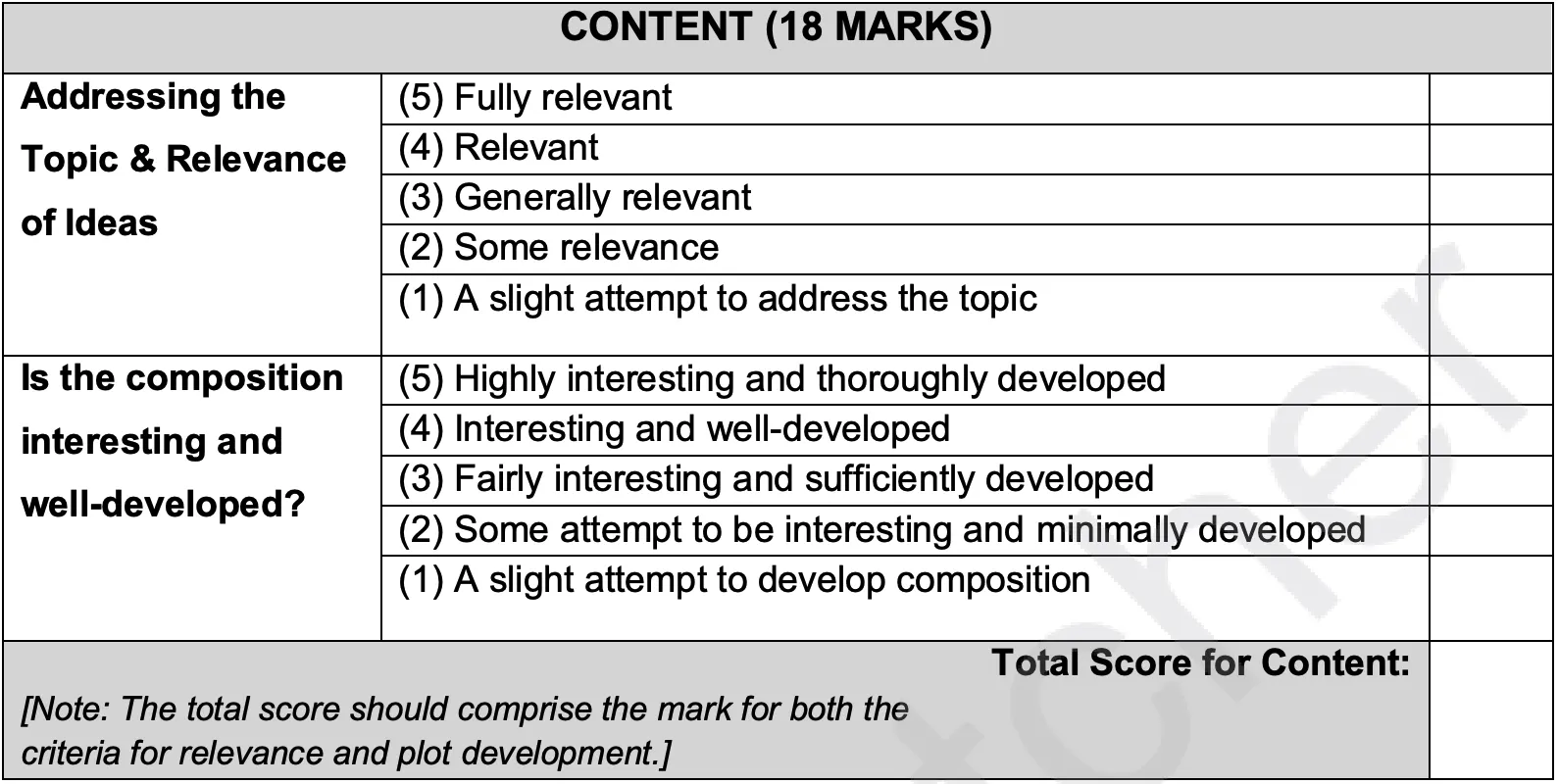
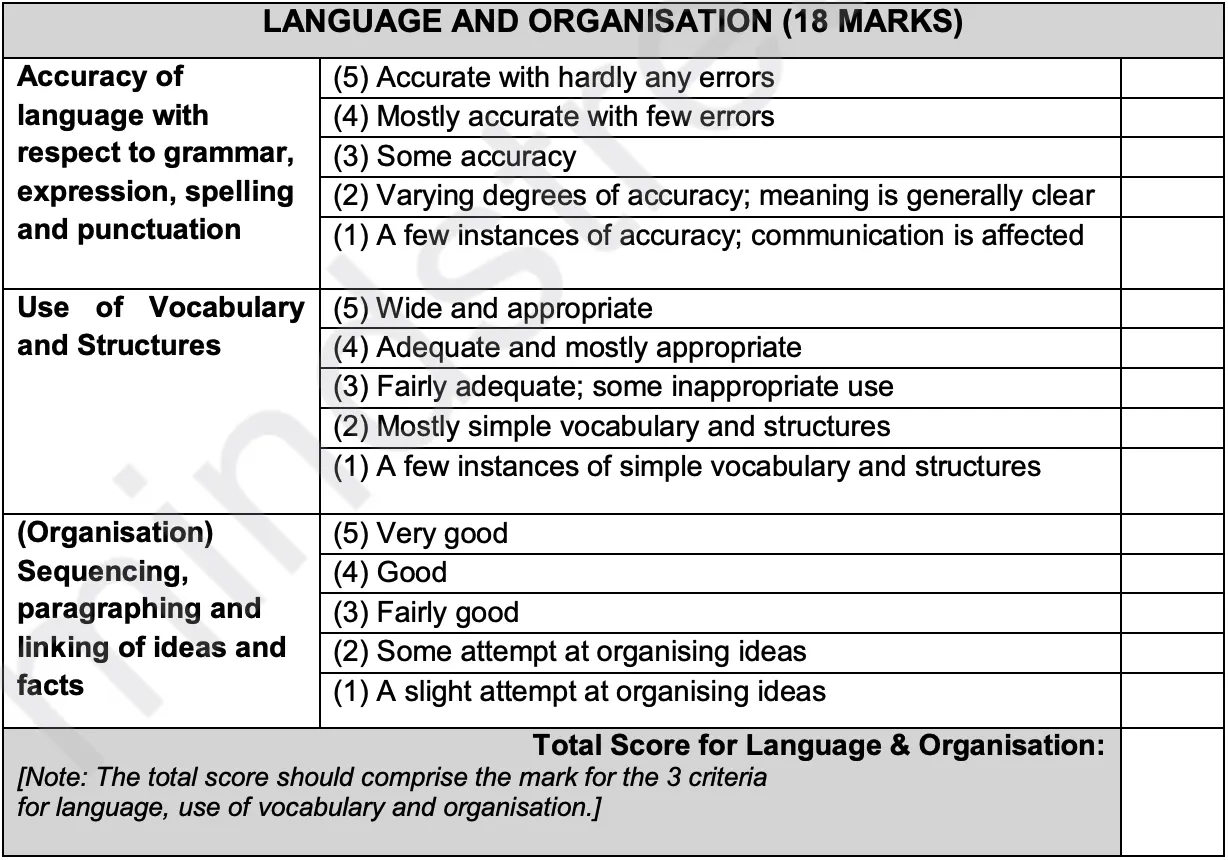
In English composition, two key areas determine your score:
Content (18 marks): Is your story relevant to the theme? Is it well-developed and engaging?
Language (18 marks): Is your writing accurate? Are ideas linked and sequenced well? Does your writing showcase strong vocabulary, varied sentence structures and effective writing techniques?
Here’s our PSLE English Composition marking rubrics, aligned with MOE’s marking standards. It's essential to fully understand this rubric to know how to score well in each component.
Common Issues in Composition Writing
Content Issues
Writing off-topic: Many students start writing without proper planning, causing them to stray from the topic.
Under-developed ideas: Insufficiently developed ideas about situations and characters can make the composition dull and un-engaging.
Language Issues
Overuse of repetitive phrases and incorrect vocabulary: Relying on simple words like "happy", "sad", or "nervous" weakens descriptions. Misused idiomatic expressions and vocabulary can confuse readers.
Ineffective sequencing and linking of ideas: Plot holes and misusing techniques like flashbacks, cliffhangers, and plot twists can confuse readers. (Myth debunked: Using these techniques doesn't guarantee better scores.)
Structural & grammatical errors: Poor sentence structure can lead to awkward phrasing or run-on sentences.
Commonly-Tested Composition Themes
At Mind Stretcher, we have successfully predicted composition themes that appeared in PSLE and school exams over multiple years. Through careful analysis of past exam trends, we’ve identified recurring themes that students can prepare for effectively.
One such commonly-tested theme is "Gaining Confidence", which we will explore in detail below. This theme often appears in different variations, such as “Overcoming Obstacles”, “An Achievement”, or “A Transformation” — all of which share similar story elements and techniques.
“Gaining Confidence” Composition Guide
Write a composition of at least 150 words about gaining confidence. Your composition should be based on the picture below.

Step 1: Brainstorm Your Plot
The pre-writing stage is crucial for organising your thoughts and structuring your story logically. Let’s break down the process:
Understanding the Theme
What does "Gaining Confidence" mean?
How can confidence be built over time?
What challenges might a character face in their journey?
Analysing the Picture Prompt
The microphone suggests a scenario involving public speaking, performing on stage, or overcoming stage fright.
Think about situations where someone might need to use a microphone, such as a school presentation, talent show, or competition.
Step 2: Plan with the Story Mountain
A well-structured composition follows the story mountain framework:
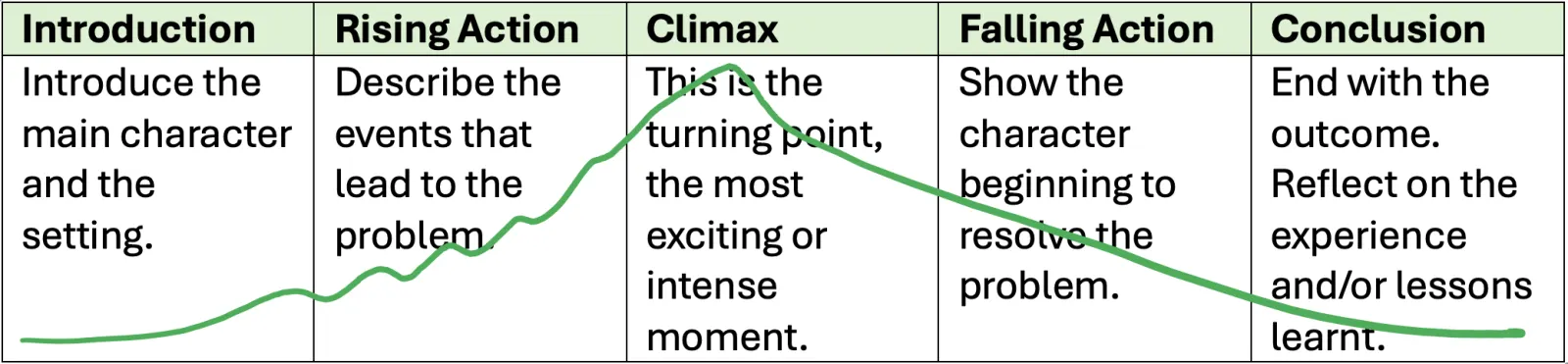
Based on the theme Gaining Confidence, your story mountain plan could look like that:
Introduction
The narrator is a shy student terrified of speaking in front of others. She’s been asked to give a speech at school, and the thought of it makes her anxious.
Rising Action
She practises for the speech but struggles. Every time she stands in front of a mirror, her hands shake, and her voice wavers. She worries about making mistakes and being laughed at. Despite this, she keeps trying, seeking support from a kind teacher or friend.
Climax
On the day of the speech, she stands at the podium, heart racing. She takes a deep breath and begins. At first, she stumbles, but then, as she continues, she realises the audience is listening attentively, not judging her. Confidence begins to replace her nerves.
Falling Action
As she finishes the speech, she feels proud of how far she’s come. The audience claps, and her anxiety completely fades.
Conclusion
She learns that facing her fear was the key to overcoming it. The next time she speaks in public, she recalls this experience and feels much more confident.
Step 3: Use Writing Techniques to Enhance Your Story
To make your composition stand out, use these writing techniques:
Opening Hooks
Capture the reader’s attention with an intriguing start, such as an internal monologue or a dramatic moment. Example of using an internal monologue:
I could not understand it. Why me? Out of forty students, Miss Wong just had to pick the one who could not even say “present” without stammering. Had I accidentally offended her? Was it because I had forgotten to laugh at her joke last week?
Show, Don’t Tell
Instead of saying "I was nervous," describe the character’s behaviour, thoughts and feelings.
My fingers trembled against the index cards, turning the crisp edges into damp waves. Each heartbeat thundered in my ears, drowning out Miss Wong's voice, and the fluorescent lights in the auditorium suddenly seemed too bright, too harsh.
Internal Monologue
Reveal the character's thoughts and fears to make the story more relatable.
My throat was tight, and I forced myself to glance at the audience. “Why are they staring at me like that?” I quickly searched for a friendly face, anyone who might make me feel less alone. “Okay, no turning back now. You’ve practised. You’ve got this. Just take a deep breath...”
Slow Motion (Slow-Mo)
Describe key moments in detail to build tension.
I took my first step towards the stage, each movement feeling heavier than the last. My foot hit the ground with a soft thud, the sound somehow too loud. I lifted my other foot, each step dragging as if I were walking through water. The moment I reached the podium, everything seemed to freeze. My hand hovered over it, the cool wood sending a shiver up my arm. I looked up, and time seemed to slow. The audience’s faces blurred, but their eyes—their eyes—were locked onto mine. My breath caught in my throat. I could not move.
Step 4: Incorporate Mind-Stretching Vocabulary Words and Phrases
Incorporate thematic Mind-Stretching Vocabulary Words and Phrases related to Gaining Confidence, such as:
gradually made incremental progress and that boosted my spirits
At first, I could hardly remember the words. However, with each practice session, I gradually made incremental progress, and that boosted my spirits. The nervousness did not disappear right away, but I could feel myself getting better, one step at a time.
slow and steady wins the race
I was not going to be impatient. “Slow and steady wins the race,” I told myself, taking my time with each sentence. I focused on speaking clearly and calmly, knowing that perfecting each part would lead to success in the end.
kept my nose to the grindstone to hone my public speaking skills to perfection
I knew the only way to overcome my fear was through practice. So, I kept my nose to the grindstone, spending hours rehearsing in front of the mirror, refining my delivery, and honing my public speaking skills to perfection.
thrust into the spotlight, I was forced to emerge from my shell
The moment I stepped on stage, I was thrust into the spotlight. The audience’s gaze was intense, but there was no turning back now. I had to emerge from my shell, leave behind my shyness, and speak with confidence, or risk losing my chance.
Final Composition Tips
Prepare for commonly-tested composition themes – take note of good plots, writing techniques to model after, and creative phrases to utilise. This is a sure way to help you prepare well for PSLE!
Spend 5-10 mins brainstorming and planning with the Story Mountain before writing. Many students think this is a waste of time, but this 5-10 mins can help ensure your story stays relevant to the topic and has a clear structure that flows smoothly.
Use engaging writing techniques such as Show, Don’t Tell, Internal Monologue, Slow-Mo and others to bring more depth to your story.
Incorporate thematic creative writing phrases and vocabulary to make your descriptions more vivid, and avoid using repetitive phrases where possible.
Analyse model compositions and refine your writing with structured feedback. Understanding what makes a strong composition and applying those techniques through guided practice will boost your writing skills in the lead-up to PSLE. Our upcoming 4-day PSLE Writing Bootcamp is designed to focus on exactly this.