
Primary 4 A* Writing Lab
In Primary 4, students must begin to elevate the quality of their writing. Our A* Writing Lab arms them with striking phrases to express themselves and uses model essays to supplement their learning.
Coverage
- 01
Brainstorm effectively for good and relevant content ideas, and write coherent compositions with ideas that flow meaningfully and logically.
- 02
Learn to develop characters and use impressive writing techniques, opening hooks and literary devices, to write interesting and compelling compositions.
- 03
Expand vocabulary using Mind-Stretching vocabulary and creative phrases to express ideas well in Situational and Composition Writing.
- 04
Analyse and model after writing skills and techniques in our Mind-Stretching A* Model Compositions.
Components
Writing Skills
- Create interesting characters, settings and plots
- Learn to use a variety of writing techniques and literary devices effectively
- Analyse well-written texts and model after them
A* Vocabulary
- Broaden exposure to a variety of vivid vocabulary and figurative language
- Learn vocabulary related to specific themes
Composition Writing
- Composition Pre-Writing – Exercises to discuss and built content knowledge about topics
- Composition Writing – Brainstorming and planning content, utilising Mind-Stretching Vocabulary & Phrases and Model Introductions in compositions
- Model Composition - Annotated with notes about the use of writing techniques and vivid expressions, and also includes Mind-Stretching Vocabulary & Phrases and Spelling List
- Spelling Test – Spelling words or phrases are tested in context; complete sentences are given to show students how to use these spelling words and phrases correctly
- Students are encouraged to memorise descriptive paragraph(s) to reinforce learning
Revision of Creative Phrases
- Practices to help students revise and apply the use of vivid vocabulary learnt in Composition Writing
Situational Writing (for exposure)
- Teaches student to compose pieces of writing focusing on Purpose, Audience, Context, Tone and Format
- Model Situational Writing – Annotated with notes on how to use techniques and vocabulary correctly to meet the requirements of the task
View our P4 A* Writing Lab curriculum materials
See the materials your child works through each week, from Writing Skills & Techniques, Annotated Model Compositions, Pre-Writing & Composition Writing and A* Vocabulary.
View P4 Programme Brochure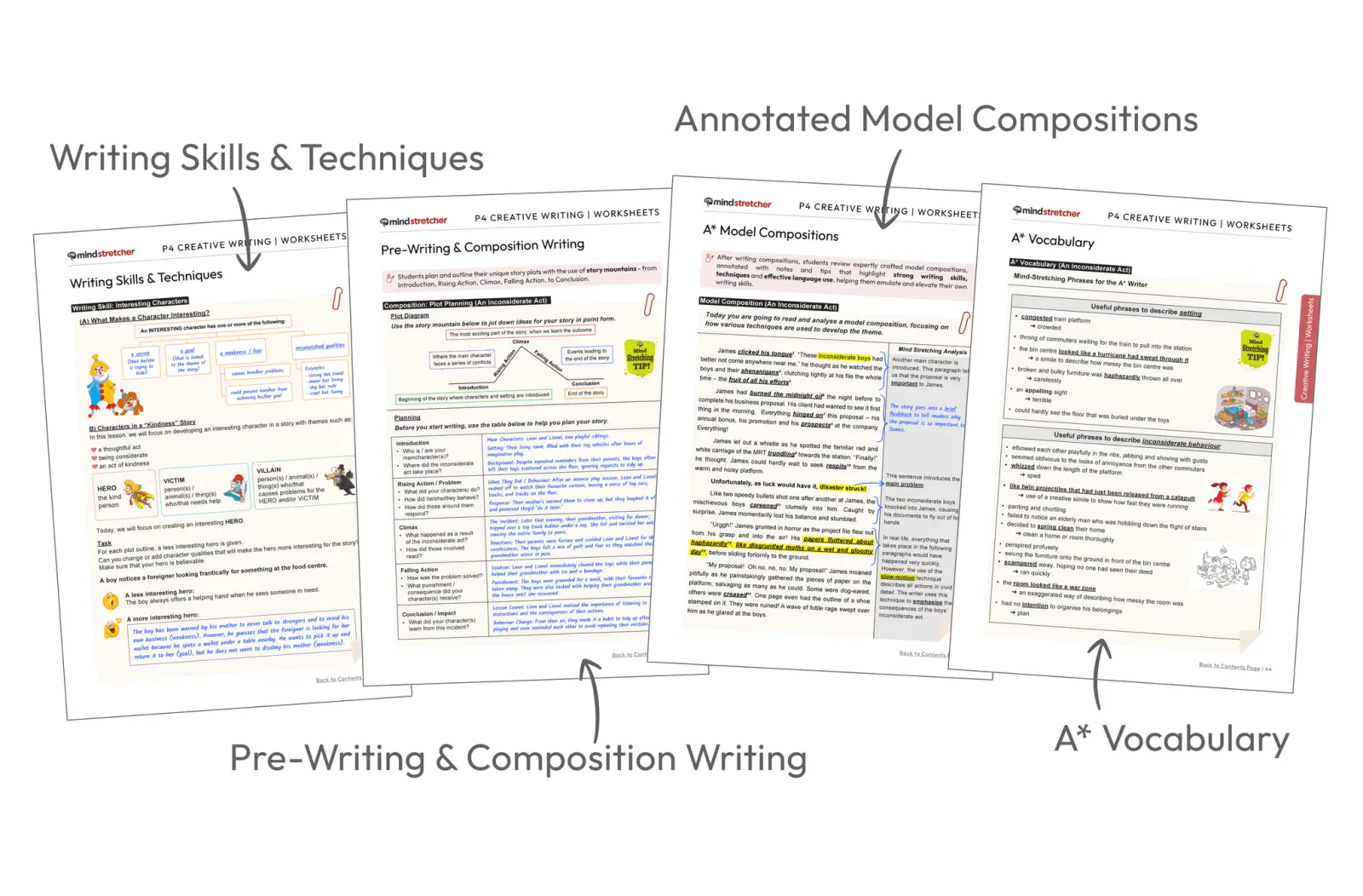
Lesson Plans
Weekly Materials
Develop Essential Writing Skills and Techniques
Create relevant and interesting ideas and plots that produce intended effects on readers.
Use Vivid Vocabulary and Figurative Language
Learn contextual vocabulary and figurative language to describe characters’ appearances, emotions and settings effectively.
Reinforce Accuracy of Expression
Through analysing texts, learn the correct application of grammatical rules, structures and vocabulary to express ideas accurately.
Model After Mind Stretcher A* Model Compositions
Study how various writing techniques and expressions are used effectively to develop the topic fully and in an interesting way.
Progress Tracking
Assessment Checkpoints
Mind Stretcher’s Mid-Year and End-of-Year Assessment Checkpoints evaluate students' writing progress, ensuring they are on track for continued improvement.
Student Progress Reports
Mind Stretcher's Progress Reports analyse strengths, weaknesses and benchmark students within our cohort, which is larger than a few schools combined!
Exam Preparation
Effective Writing Techniques
Use effective strategies to analyse the topic, questions, and given visuals to plan and write in a relevant, engaging, and structured manner.
Common Writing Topics
Stay updated on common themes and topics. Our materials are updated to reflect the revised syllabus and trends from recent past-year papers.
Vocabulary Booklets
Termly thematic spelling and vocabulary booklets help students expand their vocabulary, benefiting their overall mastery of the language and performance in various examinable components.