Tongue Twisters for English fluency
Tongue-twisters for English eloquence, fun & laughter, peace & joy!
Which came first – speaking or writing? If we look at the history of the world, we will discover that the spoken language came much earlier, before a system of writing was invented to record the sounds that are used by people to communicate.
Yet, when it comes to the secondary school examinations, the oral and listening components are only given (wait for it…) lip service, it seems! Consider this – for the secondary school GCE O-level English paper, Writing is worth 35%, Comprehension is worth 35%, Listening is worth 10%, and Oral Communication is worth 20%!
How can a secondary school student improve in his or her ability to speak well? As usual, the clichéd answer ("talk more") doesn't cut any ice. It just doesn't work. In fact, I'm sure that you have experienced the situation personally, when you were asked to keep quiet in class, so that the teacher could teach!
This would have made sense in the 20th century, a world in which the teacher was the dispenser of knowledge, and the students passively memorised. However, the 21st century demands a different set of skills. Teachers and textbooks no longer have a duopoly on knowledge – all the knowledge of the world is available through Google, on students' handphones. What students need, is the ability and opportunity to think, and to express themselves clearly and logically.
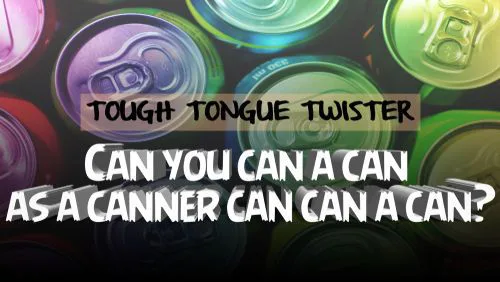
That being said, let's start off with some baby steps – are you able to say the following tongue-twisters clearly?
Three thin thinkers thinking thick thoughtful thoughts
A proper cup of coffee from a proper copper coffee pot
Eleven benevolent elephants
Practise saying them to yourself, and as you gradually develop your ability to master your tongue muscle and increase your confidence, you will naturally feel that you are able to speak up and express yourself, instead of being too shy to say what you truly want to say.
By the way, here’s a mind-stretching, believe-it-or-not general knowledge tidbit for you - there is actually an International Tongue Twister Day! This knotty day (pardon the pun!) is celebrated on the second Sunday of every November. That’s right, so don’t get your tongue tied this coming 13 November 2022. No, no, no - We're not talking about rolling or curling your taste-tester. Rather, we're looking at Peter Piper, Betty Botter, Steven & Steve, Quacko Quek, She who sells sea-shells, the woodchuck, and all their amigos!
Yes, if you can stretch your mindless mind, you will be able to mind the mindful mind!
Else, if you fail, you will join the five frantic frogs, in fleeing from fifty fierce fishes!
We at Mind Stretcher are here to teach you proper English, so be sure to attend our lessons & refrain from using Singlish!
(at least for all aspects of the English exam, at whichever levels)
Tongue twisters do train you to be more articulate, and by extension, improve your eloquence. This eloquence is extremely important not only for school or national oral examinations at the PSLE and O-Level, they also imperative in your ability to ace the Project Work subject at A-Levels, or the Theory of Knowledge (TOK) subject at the IB Diploma. Of course, beyond the classroom exams and tests, this eloquence is one key aspect that can make you stand out from amongst many of your peers, when you venture into the working world next time. After all, the main reason why we learn English is for us to be confident communicators, is it not?
To conclude, here are some really tasty, tantalizingly tangible benefits of tongue twisters:
-
Tongue twisters have been proven to clarify the pronunciation of words;
-
Tongue twisters stretch and strengthen the muscles which you use to speak! (who ever knew you had to EXERCISE your mouth?)
-
Tongue twisters help you identify the words you have pronouncing; and
-
Tongue twisters help you ‘warm up’ and gets you all excited to strut around the stage and show the audience your speaking magic!
(Many performers and public speakers often speak tongue twisters before they go out on stage)
So now you know! Besides being fun to speak, rap and talk about, tongue twisters aid you in your English fluency. There you go!
We do cover quite a bit of these fun, yet highly instructive skills and techniques, in our Mind Stretcher English classes, Webinars & upcoming podcasts So please do join us when you have the time. Until then, watch this space!